

-
Capacitors
- Ceramic Capacitors
- Tantalum Capacitors
- Accessories
- Aluminum - Polymer Capacitors
- Aluminum Electrolytic Capacitors
- Capacitor Networks, Arrays
- Electric Double Layer Capacitors (EDLC), Supercapacitors
- Film Capacitors
- Mica and PTFE Capacitors
- Niobium Oxide Capacitors
- Silicon Capacitors
- Tantalum - Polymer Capacitors
- Thin Film Capacitors
- Trimmers, Variable Capacitors
-
Discrete Semiconductor Products
- Diodes - Bridge Rectifiers
- Diodes - Rectifiers - Arrays
- Diodes - Rectifiers - Single
- Diodes - RF
- Diodes - Variable Capacitance (Varicaps, Varactors)
- Diodes - Zener - Arrays
- Diodes - Zener - Single
- Power Driver Modules
- Thyristors - DIACs, SIDACs
- Thyristors - SCRs
- Thyristors - SCRs - Modules
- Thyristors - TRIACs
- Transistors - Bipolar (BJT) - Arrays
- Transistors - Bipolar (BJT) - Arrays, Pre-Biased
- Transistors - Bipolar (BJT) - RF
- Transistors - Bipolar (BJT) - Single
- Transistors - Bipolar (BJT) - Single, Pre-Biased
- Transistors - FETs, MOSFETs - Arrays
- Transistors - FETs, MOSFETs - RF
- Transistors - FETs, MOSFETs - Single
- Transistors - IGBTs - Arrays
- Transistors - IGBTs - Modules
- Transistors - IGBTs - Single
- Transistors - JFETs
- Transistors - Programmable Unijunction
- Transistors - Special Purpose
- Inductors, Coils, Chokes
-
Integrated Circuits (ICs)
- Audio Special Purpose
- Clock/Timing - Application Specific
- Clock/Timing - Clock Buffers, Drivers
- Clock/Timing - Clock Generators, PLLs, Frequency Synthesizers
- Clock/Timing - Delay Lines
- Clock/Timing - IC Batteries
- Clock/Timing - Programmable Timers and Oscillators
- Clock/Timing - Real Time Clocks
- Data Acquisition - ADCs/DACs - Special Purpose
- Data Acquisition - Analog Front End (AFE)
- Data Acquisition - Analog to Digital Converters (ADC)
- Data Acquisition - Digital Potentiometers
- Data Acquisition - Digital to Analog Converters (DAC)
- Data Acquisition - Touch Screen Controllers
- Embedded - CPLDs (Complex Programmable Logic Devices)
- Embedded - DSP (Digital Signal Processors)
- Embedded - FPGAs (Field Programmable Gate Array)
- Embedded - FPGAs (Field Programmable Gate Array) with Microcontrollers
- Embedded - Microcontroller or Microprocessor Modules
- Embedded - Microcontrollers
- Embedded - Microcontrollers - Application Specific
- Embedded - Microprocessors
- Embedded - PLDs (Programmable Logic Device)
- Embedded - System On Chip (SoC)
- Interface - Analog Switches - Special Purpose
- Interface - Analog Switches, Multiplexers, Demultiplexers
- Interface - CODECs
- Interface - Controllers
- Interface - Direct Digital Synthesis (DDS)
- Interface - Drivers, Receivers, Transceivers
- Interface - Encoders, Decoders, Converters
- Interface - Filters - Active
- Interface - I/O Expanders
- Interface - Modems - ICs and Modules
- Interface - Modules
- Interface - Sensor and Detector Interfaces
- Interface - Serializers, Deserializers
- Interface - Signal Buffers, Repeaters, Splitters
- Interface - Signal Terminators
- Interface - Specialized
- Interface - Telecom
- Interface - UARTs (Universal Asynchronous Receiver Transmitter)
- Interface - Voice Record and Playback
- Linear - Amplifiers - Audio
- Linear - Amplifiers - Instrumentation, OP Amps, Buffer Amps
- Linear - Amplifiers - Special Purpose
- Linear - Amplifiers - Video Amps and Modules
- Linear - Analog Multipliers, Dividers
- Linear - Comparators
- Linear - Video Processing
- Logic - Buffers, Drivers, Receivers, Transceivers
- Logic - Comparators
- Logic - Counters, Dividers
- Logic - FIFOs Memory
- Logic - Flip Flops
- Logic - Gates and Inverters
- Logic - Gates and Inverters - Multi-Function, Configurable
- Logic - Latches
- Logic - Multivibrators
- Logic - Parity Generators and Checkers
- Logic - Shift Registers
- Logic - Signal Switches, Multiplexers, Decoders
- Logic - Specialty Logic
- Logic - Translators, Level Shifters
- Logic - Universal Bus Functions
- Memory
- Memory - Batteries
- Memory - Configuration Proms for FPGAs
- Memory - Controllers
- PMIC - AC DC Converters, Offline Switchers
- PMIC - Battery Chargers
- PMIC - Battery Management
- PMIC - Current Regulation/Management
- PMIC - Display Drivers
- PMIC - Energy Metering
- PMIC - Full, Half-Bridge Drivers
- PMIC - Gate Drivers
- PMIC - Hot Swap Controllers
- PMIC - Laser Drivers
- PMIC - LED Drivers
- PMIC - Lighting, Ballast Controllers
- PMIC - Motor Drivers, Controllers
- PMIC - OR Controllers, Ideal Diodes
- PMIC - PFC (Power Factor Correction)
- PMIC - Power Distribution Switches, Load Drivers
- PMIC - Power Management - Specialized
- PMIC - Power Over Ethernet (PoE) Controllers
- PMIC - Power Supply Controllers, Monitors
- PMIC - RMS to DC Converters
- PMIC - Supervisors
- PMIC - Thermal Management
- PMIC - V/F and F/V Converters
- PMIC - Voltage Reference
- PMIC - Voltage Regulators - DC DC Switching Controllers
- PMIC - Voltage Regulators - DC DC Switching Regulators
- PMIC - Voltage Regulators - Linear
- PMIC - Voltage Regulators - Linear + Switching
- PMIC - Voltage Regulators - Linear Regulator Controllers
- PMIC - Voltage Regulators - Special Purpose
- Specialized ICs
- Isolators
- Relays
-
RF/IF and RFID
- Attenuators
- Balun
- RF Accessories
- RF Amplifiers
- RF Antennas
- RF Demodulators
- RF Detectors
- RF Diplexers
- RF Directional Coupler
- RF Evaluation and Development Kits, Boards
- RF Front End (LNA + PA)
- RF Misc ICs and Modules
- RF Mixers
- RF Modulators
- RF Power Controller ICs
- RF Power Dividers/Splitters
- RF Receiver, Transmitter, and Transceiver Finished Units
- RF Receivers
- RF Shields
- RF Switches
- RF Transceiver ICs
- RF Transceiver Modules
- RF Transmitters
- RFI and EMI - Contacts, Fingerstock and Gaskets
- RFI and EMI - Shielding and Absorbing Materials
- RFID Accessories
- RFID Antennas
- RFID Evaluation and Development Kits, Boards
- RFID Reader Modules
- RFID Transponders, Tags
- RFID, RF Access, Monitoring ICs
- RF Circulators and Isolators
-
Sensors, Transducers
- Accessories
- Amplifiers
- Capacitive Touch Sensors, Proximity Sensor ICs
- Color Sensors
- Current Transducers
- Dust Sensors
- Encoders
- Flex Sensors
- Float, Level Sensors
- Flow Sensors
- Force Sensors
- Gas Sensors
- Humidity, Moisture Sensors
- Image Sensors, Camera
- IrDA Transceiver Modules
- Magnetic Sensors - Compass, Magnetic Field (Modules)
- Magnetic Sensors - Linear, Compass (ICs)
- Magnetic Sensors - Position, Proximity, Speed (Modules)
- Magnetic Sensors - Switches (Solid State)
- Magnets - Multi Purpose
- Magnets - Sensor Matched
- Motion Sensors - Accelerometers
- Motion Sensors - Gyroscopes
- Motion Sensors - IMUs (Inertial Measurement Units)
- Motion Sensors - Inclinometers
- Motion Sensors - Optical
- Motion Sensors - Tilt Switches
- Motion Sensors - Vibration
- Multifunction
- Optical Sensors - Ambient Light, IR, UV Sensors
- Optical Sensors - Distance Measuring
- Optical Sensors - Mouse
- Optical Sensors - Photo Detectors - CdS Cells
- Optical Sensors - Photo Detectors - Logic Output
- Optical Sensors - Photo Detectors - Remote Receiver
- Optical Sensors - Photodiodes
- Optical Sensors - Photoelectric, Industrial
- Optical Sensors - Photointerrupters - Slot Type - Logic Output
- Optical Sensors - Photointerrupters - Slot Type - Transistor Output
- Optical Sensors - Phototransistors
- Optical Sensors - Reflective - Analog Output
- Optical Sensors - Reflective - Logic Output
- Position Sensors - Angle, Linear Position Measuring
- Pressure Sensors, Transducers
- Proximity Sensors
- Proximity/Occupancy Sensors - Finished Units
- Sensor Cable - Accessories
- Sensor Cable - Assemblies
- Sensor Interface - Junction Blocks
- Shock Sensors
- Solar Cells
- Specialized Sensors
- Strain Gauges
- Temperature Sensors - Analog and Digital Output
- Temperature Sensors - NTC Thermistors
- Temperature Sensors - PTC Thermistors
- Temperature Sensors - RTD (Resistance Temperature Detector)
- Temperature Sensors - Thermocouple, Temperature Probes
- Temperature Sensors - Thermostats - Mechanical
- Temperature Sensors - Thermostats - Solid State
- Ultrasonic Receivers, Transmitters
- Camera Modules
- LVDT Transducers (Linear Variable Differential Transformer)
- Optical Sensors - Photonics - Counters, Detectors, SPCM (Single Photon Counting Module)
- Touch Sensors
-
Circuit Protection
- Accessories
- Circuit Breakers
- Electrical, Specialty Fuses
- Fuseholders
- Fuses
- Gas Discharge Tube Arresters (GDT)
- Ground Fault Circuit Interrupter (GFCI)
- Inrush Current Limiters (ICL)
- Lighting Protection
- PTC Resettable Fuses
- Surge Suppression ICs
- TVS - Diodes
- TVS - Mixed Technology
- TVS - Surge Protection Devices (SPDs)
- TVS - Thyristors
- TVS - Varistors, MOVs
- Thermal Cutoffs (Thermal Fuses)
-
Connectors, Interconnects
- Backplane Connectors - ARINC Inserts
- Backplane Connectors - ARINC
- Backplane Connectors - Accessories
- Backplane Connectors - Contacts
- Backplane Connectors - DIN 41612
- Backplane Connectors - Hard Metric, Standard
- Backplane Connectors - Housings
- Backplane Connectors - Specialized
- Banana and Tip Connectors - Accessories
- Banana and Tip Connectors - Adapters
- Banana and Tip Connectors - Binding Posts
- Banana and Tip Connectors - Jacks, Plugs
- Barrel - Accessories
- Barrel - Adapters
- Barrel - Audio Connectors
- Barrel - Power Connectors
- Between Series Adapters
- Blade Type Power Connectors - Accessories
- Blade Type Power Connectors - Contacts
- Blade Type Power Connectors - Housings
- Blade Type Power Connectors
- Card Edge Connectors - Accessories
- Card Edge Connectors - Adapters
- Card Edge Connectors - Contacts
- Card Edge Connectors - Edgeboard Connectors
- Card Edge Connectors - Housings
- Circular Connectors - Accessories
- Circular Connectors - Adapters
- Circular Connectors - Backshells and Cable Clamps
- Circular Connectors - Contacts
- Circular Connectors - Housings
- Circular Connectors
- Coaxial Connectors (RF) - Accessories
- Coaxial Connectors (RF) - Adapters
- Coaxial Connectors (RF) - Contacts
- Coaxial Connectors (RF) - Terminators
- Coaxial Connectors (RF)
- Contacts - Leadframe
- Contacts - Multi Purpose
- Contacts, Spring Loaded (Pogo Pins), and Pressure
- D-Shaped Connectors - Centronics
- D-Sub Connectors
- D-Sub, D-Shaped Connectors - Accessories - Jackscrews
- D-Sub, D-Shaped Connectors - Accessories
- D-Sub, D-Shaped Connectors - Adapters
- D-Sub, D-Shaped Connectors - Backshells, Hoods
- D-Sub, D-Shaped Connectors - Contacts
- D-Sub, D-Shaped Connectors - Housings
- D-Sub, D-Shaped Connectors - Terminators
- FFC, FPC (Flat Flexible) Connectors - Accessories
- FFC, FPC (Flat Flexible) Connectors - Contacts
- FFC, FPC (Flat Flexible) Connectors - Housings
- FFC, FPC (Flat Flexible) Connectors
- Fiber Optic Connectors - Accessories
- Fiber Optic Connectors - Adapters
- Fiber Optic Connectors - Housings
- Fiber Optic Connectors
- Heavy Duty Connectors - Accessories
- Heavy Duty Connectors - Assemblies
- Heavy Duty Connectors - Contacts
- Heavy Duty Connectors - Frames
- Heavy Duty Connectors - Housings, Hoods, Bases
- Heavy Duty Connectors - Inserts, Modules
- Keystone - Accessories
- Keystone - Faceplates, Frames
- Keystone - Inserts
- LGH Connectors
- Memory Connectors - Accessories
- Memory Connectors - Inline Module Sockets
- Memory Connectors - PC Card Sockets
- Memory Connectors - PC Cards - Adapters
- Modular Connectors - Accessories
- Modular Connectors - Adapters
- Modular Connectors - Jacks With Magnetics
- Modular Connectors - Jacks
- Modular Connectors - Plug Housings
- Modular Connectors - Plugs
- Modular Connectors - Wiring Blocks - Accessories
- Modular Connectors - Wiring Blocks
- Photovoltaic (Solar Panel) Connectors - Accessories
- Photovoltaic (Solar Panel) Connectors - Contacts
- Photovoltaic (Solar Panel) Connectors
- Pluggable Connectors - Accessories
- Pluggable Connectors
- Power Entry Connectors - Accessories
- Power Entry Connectors - Inlets, Outlets, Modules
- Rectangular Connectors - Accessories
- Rectangular Connectors - Adapters
- Rectangular Connectors - Arrays, Edge Type, Mezzanine (Board to Board)
- Rectangular Connectors - Board In, Direct Wire to Board
- Rectangular Connectors - Board Spacers, Stackers (Board to Board)
- Rectangular Connectors - Contacts
- Rectangular Connectors - Free Hanging, Panel Mount
- Rectangular Connectors - Headers, Male Pins
- Rectangular Connectors - Headers, Receptacles, Female Sockets
- Rectangular Connectors - Headers, Specialty Pin
- Rectangular Connectors - Housings
- Rectangular Connectors - Spring Loaded
- Shunts, Jumpers
- Sockets for ICs, Transistors - Accessories
- Sockets for ICs, Transistors - Adapters
- Sockets for ICs, Transistors
- Solid State Lighting Connectors - Accessories
- Solid State Lighting Connectors - Contacts
- Solid State Lighting Connectors
- Terminal Blocks - Accessories - Jumpers
- Terminal Blocks - Accessories - Marker Strips
- Terminal Blocks - Accessories - Wire Ferrules
- Terminal Blocks - Accessories
- Terminal Blocks - Adapters
- Terminal Blocks - Barrier Blocks
- Terminal Blocks - Contacts
- Terminal Blocks - Din Rail, Channel
- Terminal Blocks - Headers, Plugs and Sockets
- Terminal Blocks - Interface Modules
- Terminal Blocks - Panel Mount
- Terminal Blocks - Power Distribution
- Terminal Blocks - Specialized
- Terminal Blocks - Wire to Board
- Terminal Junction Systems
- Terminal Strips and Turret Boards
- Terminals - Accessories
- Terminals - Adapters
- Terminals - Barrel, Bullet Connectors
- Terminals - Foil Connectors
- Terminals - Housings, Boots
- Terminals - Knife Connectors
- Terminals - Magnetic Wire Connectors
- Terminals - PC Pin Receptacles, Socket Connectors
- Terminals - PC Pin, Single Post Connectors
- Terminals - Quick Connects, Quick Disconnect Connectors
- Terminals - Rectangular Connectors
- Terminals - Ring Connectors
- Terminals - Screw Connectors
- Terminals - Solder Lug Connectors
- Terminals - Spade Connectors
- Terminals - Specialized Connectors
- Terminals - Turret Connectors
- Terminals - Wire Pin Connectors
- Terminals - Wire Splice Connectors
- Terminals - Wire to Board Connectors
- USB, DVI, HDMI Connectors - Accessories
- USB, DVI, HDMI Connectors - Adapters
- USB, DVI, HDMI Connectors
- Crystals, Oscillators, Resonators
-
Development Boards, Kits, Programmers
- Accessories
- Evaluation Boards - Analog to Digital Converters (ADCs)
- Evaluation Boards - Audio Amplifiers
- Evaluation Boards - DC/DC & AC/DC (Off-Line) SMPS
- Evaluation Boards - Digital to Analog Converters (DACs)
- Evaluation Boards - Embedded - Complex Logic (FPGA, CPLD)
- Evaluation Boards - Embedded - MCU, DSP
- Evaluation Boards - Expansion Boards, Daughter Cards
- Evaluation Boards - LED Drivers
- Evaluation Boards - Linear Voltage Regulators
- Evaluation Boards - Op Amps
- Evaluation Boards - Sensors
- Evaluation and Demonstration Boards and Kits
- Programmers, Emulators, and Debuggers
- Programming Adapters, Sockets
- Software, Services
- UV Erasers
- Filters
- Memory Cards, Modules
- Potentiometers, Variable Resistors
- Power Supplies - Board Mount
- Power Supplies - External/Internal (Off-Board)
- Resistors
PS Audio introduce NuWave DSD DAC | DAR__KO
CPLD.聽“Can punch low down”? For Colorado’s PS Audio the past twelve months’ show promo聽has centred on the soon-to-be-released BHK Signature 250聽power amplifier: 250wpc into 8 Ohms, 500wpc into 4 Ohms, 6922 tube input, MOSFET output, US$7499. BHK? Them be聽the initials of the amplifier chief designer Bascom H. King.
A prototype handled the BHK Signature’s public debut聽at RMAF last October…
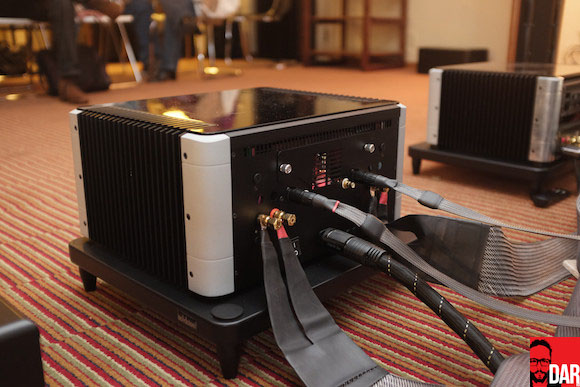
…before a聽finished version was hauled to CES in January 2015 (detailed聽here)聽to serve as聽a static display talking point…
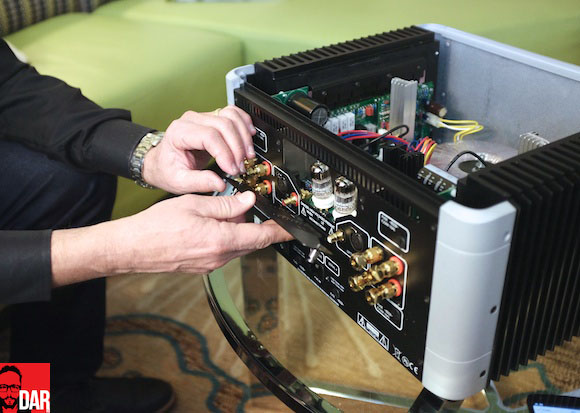
…which in turn led to a聽real-life outing with Magnepan 20.7 loudspeakers at May’s聽Munich High End Show…
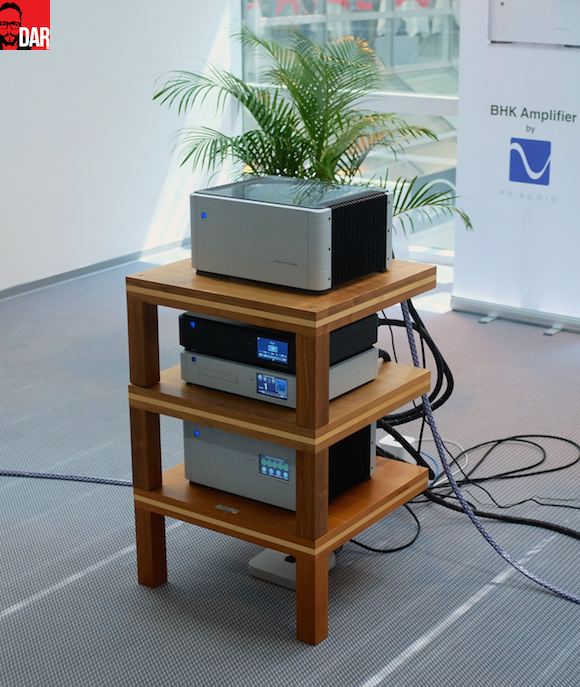
…and then聽two weeks later聽a pair of 300wpc monoblocked BHKs (US$15000/pr) lit up Irvine at T.H.E Newport Show:
 …
…
..which aren’t pictured above (ha!) because a) three shots of the same amplifier is an elegant sufficency聽and b)聽you聽need to marvel at the聽view聽enjoyed by聽Paul McGowan and co. during聽the 3.5 days demo-ing said amplifiers at聽the Hotel Irvine.
Four聽separate sightings by yours truly at four separate shows. That’s some serious touting by the Boulder manufacturer. You’d therefore reasonably聽expect the PS Audio press release that聽hit the DAR inbox yesterday morning to聽be more of the same: a trumpeting of the BHK Signature 250’s (and 300) formal release date.
But no.
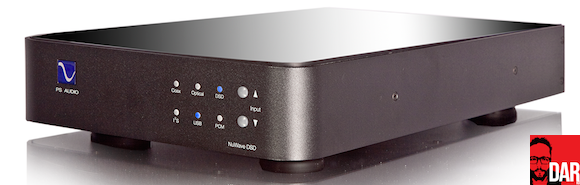
Instead, an聽announcement of the revised NuWave聽DAC which itself supplanted the Digital Link III at the tail end of 2012. On the surface it looks simple enough: the NuWave DSD updates the forerunning NuWave with DSD playback capabilities whilst adding an聽I2S input to its聽forerunner’s asynchronous USB, coaxial and toslink digital inputs – all of which are sample-rate conversion free.
The NuWave DSD will read up to聽32bit/192kHz PCM on all but the toslink input (which is capped at 96kHz). Single- and double-rate DSD feeds must be piped in via聽I2S or USB.
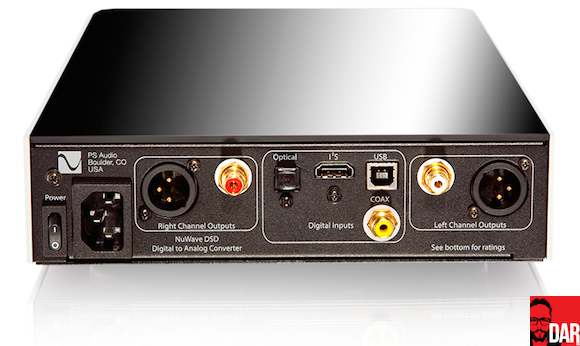
It’s on the inside that things have been switched up more significantly.
“What makes the NuWave DSD so great? We鈥檝e taken the lessons learned from DirectStream, and applied them to a smaller-scale, lower-cost unit,” reads the press release.
That doesn’t mean you’ll get Ted Smith’s FPGA decoder for US$1295. Decoding is still handled by a traditional off-the-shelf DAC chip. For聽this聽DSD聽iteration, that means an Sabre model from ESS Labs, switched up from聽the predecessor’s TI/Burr Brown silicon.
“Which ESS chip, Mr McGowan?” hollered I. Despite the choice of decoder silicon聽being only one of several influencers of a DAC’s sound, consumers聽like to know.
McGowan spills the beans: “It is the ES9010K2M which is out of their portable series of reference DAC chips. We chose it from testing a bunch of different ones and found this to be the most musical. Because it was developed as a portable DAC we had some power supply challenges but those were solved by Bob Stadtherr in engineering. The choice of a passive filter after the DAC and before the output stage was critical.”
Handling input data聽is聽something called a CPLD聽(Complex Programmable Logic Device) – reportedly聽a “simplified FPGA”. The CPLD analyses the incoming signal’s format and sample rate, re-clocks it and thus (hopefully) reduces jitter before “waveshaping” the data and sending it on to the ESS Sabre DAC chip.
An email back and forth聽with Mr McGowan takes us further into the technicalities:聽“The CPLD is a smaller FPGA, just not as many gates, but allows us to perform complex processing on the data. One of its primary functions is to organize all data the same, so if the XMOS feeds the CPLD or the input switch from S/PDIF or I2S, data is first organized in something similar to a RAM buffer, wave shaped and then output with our own clock to the I2S inputs of the Sabre [DAC chip]. Had we used a standard switch to simply select which input fed the DAC, each would have had a different sound, some better some worse. Using the CPLD to organize, identify and shape the data regardless of input, not only helps with consistency of performance but everything played through the system is improved regardless of quality of source.”
Perhaps the single聽biggest influencer聽of a DAC’s sound is its power supply.聽As well as “7 regulators, properly-bypassed high-speed switching diodes, and a massive 15,000 mFd of storage capacitance”, the NuWave DSD DAC’s mains聽juicer聽comes in the form of a larger-than-usual toroidal, similar to that found in the NuWave Phono Converter and consistent with other聽PS Audio products, including the aforementioned BHK amplifier.
Lastly: “The output stage is a unique Class-A configuration, fully balanced and direct coupled hybrid array (utilizing both discrete semiconductors and ICs), with an extended bandwidth of -3dB at 60 kHz!”
The NuWave DSD DAC comes in black or white and will sell for US$1299 – that’s US$300 more than the outgoing version.
Further information: PS Audio
Related Posts
.jpg)

Comments (4)
-
 Jessica MooreThis article about electronic components is well-written and informative. It covers a wide range of topics and provides valuable insights into the world of electronics. I found the explanations to be clear and easy to understand, even for someone with limited technical knowledge.November 30, 2019
-
 Adam TaylorI also enjoyed reading this article. It's great to see such clear explanations of complex topics. Looking forward to reading more from this author in the future.December 5, 2019
-
-
 Ryan FordI completely agree with the previous reviewer. This article is an excellent resource for anyone interested in learning about electronic components. I particularly appreciated the section on common types of resistors and how to read their values. Keep up the good work!December 5, 2020
Write A Comment
Popular News
-
Vishay Intertechnology, Inc. (NYSE:VSH) has been assigned a consensus rating of ...Jul 13, 2017
-
Vishay Intertechnology, a Rare Tech Stock on SaleThe valuation of technology sto...Apr 24, 2017
-
Digital and memory ICs constitute about two-thirds of today's roughly $320 billi...Jul 14, 2017
-
Integrated Circuit,Diodes, Transistors,Semiconductors,Capacitance,resistance,Tan...Sep 5, 2017
-
HELLA Aglaia and NXP open visual platform for automated driving safety....Sep 13, 2017